Mount Wutai and
the Karma Kagyu Lineage
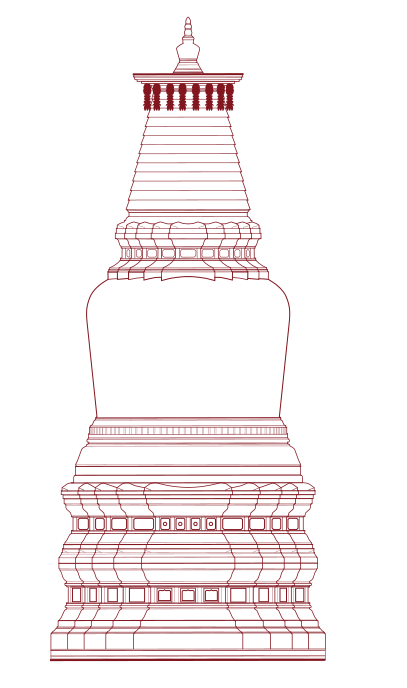
The Da Bai Ta
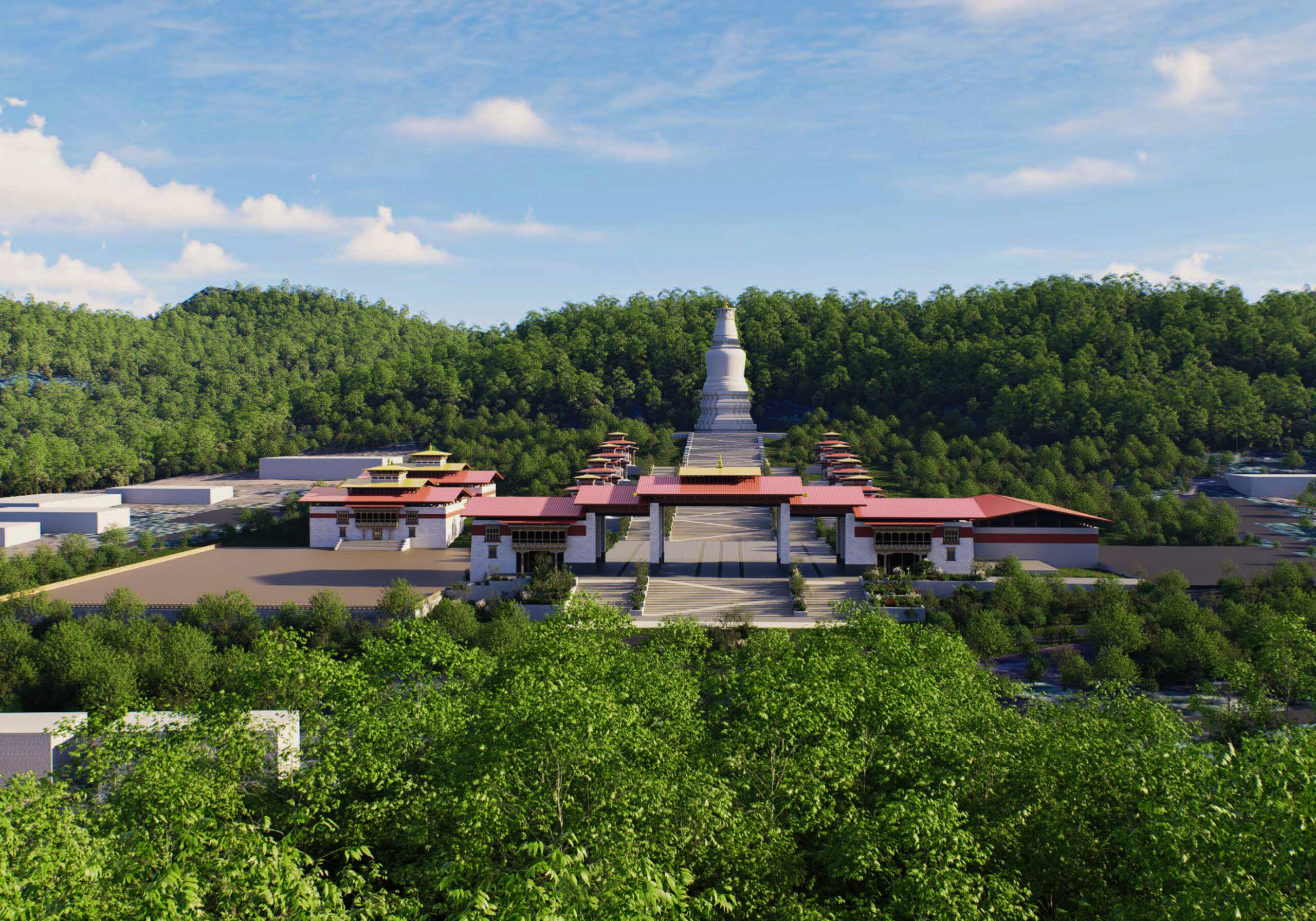
Mount Wutai, Wutaishan, in Shanxi, China, is held by tradition to be the earthly abode of Manjushri, the Bodhisattva of Wisdom. The Da Bai Ta stands within the Tayuan Temple complex at its heart, and is among the most recognisable stupas in the Buddhist world.
The 5th Karmapa
and the Yongle Emperor
In 1407 the Yongle Emperor Zhu Di invited the 5th Karmapa Deshin Shegpa to the Ming court, where the Karmapa performed funerary rites at Linggu Temple for the late Emperor's parents and was bestowed the title of Great Treasure Prince of Dharma, Da Bao Fa Wang, the highest religious title in the Ming system.
The following year the Karmapa undertook a pilgrimage to Mount Wutai, taking residence at Xiantong Temple, which the Emperor had renovated as his quarters at the sacred mountain. The Yongle reign was at the same time a period of unprecedented imperial patronage of the Da Bai Ta and of the Tayuan Temple complex around it.
The link between the Karmapa lineage and Mount Wutai, the abode of the Bodhisattva of Wisdom, was thus established in the formative decade of Sino-Tibetan religious diplomacy, and remains alive in the Karma Kagyu tradition today.
Carried to Bhutan
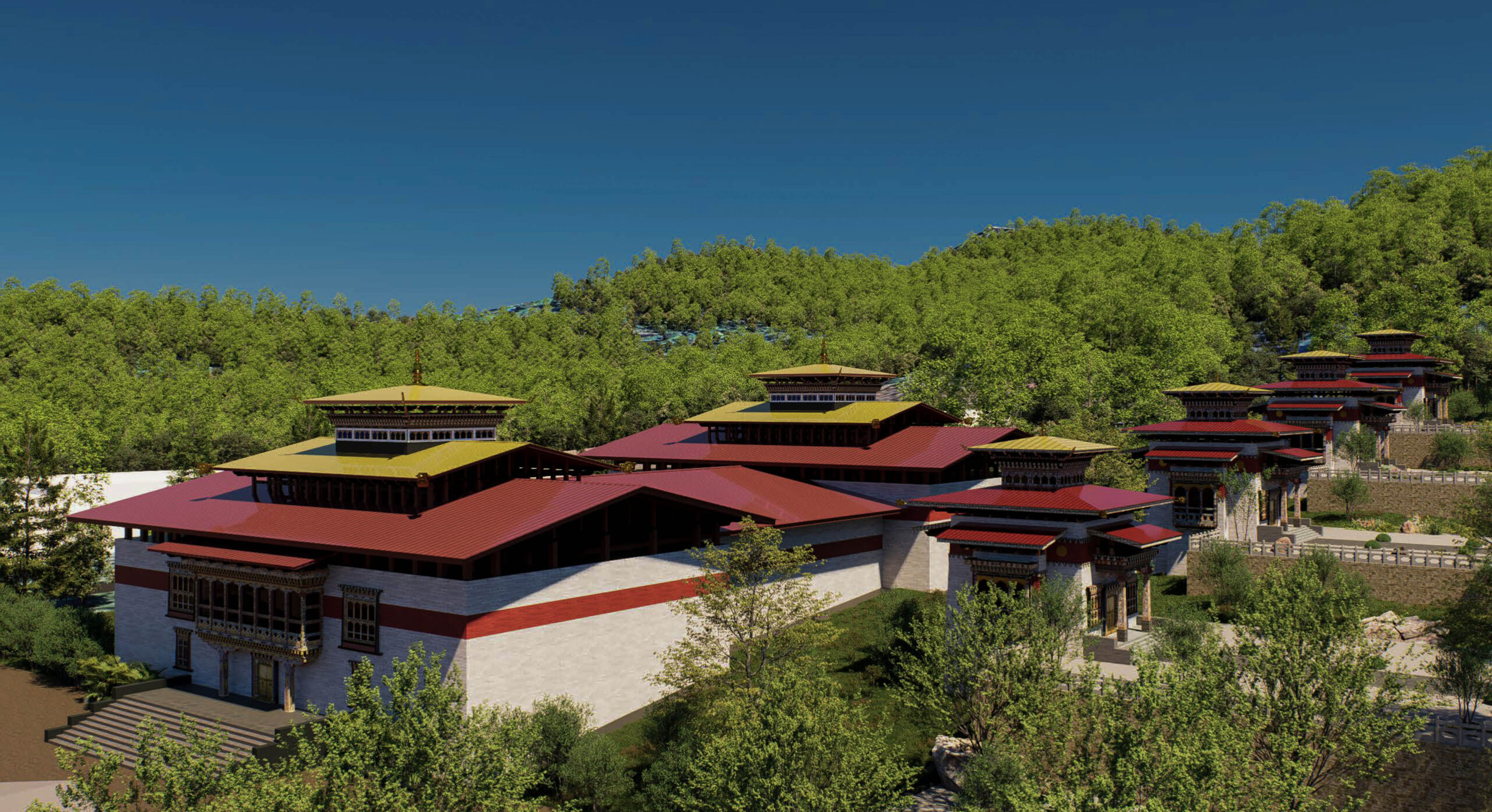
Jampal Gyepai Dangden is conceived as a continuation of that lineage, six centuries on and for the first time on Bhutanese soil. By bringing a Wutaishan-inspired Great White Stupa to Gelephu Mindfulness City, the project re-establishes a living link between the Karma Kagyu tradition's connection to the Bodhisattva of Wisdom and a contemporary site of national and pan-Buddhist significance.
Sources: the Karma Kagyu lineage office biography of the 5th Karmapa at kagyuoffice.org; Karma Thinley, The History of the Sixteen Karmapas of Tibet (Prajna Press, 1980); Elliot Sperling, "The 5th Karma-pa and Some Aspects of the Relationship between Tibet and the Early Ming", in Tibetan Studies in Honour of Hugh Richardson (Aris and Phillips, 1980).